Handa City in Aichi Prefecture has a long history of brewing culture, including vinegar, sake, and beer.
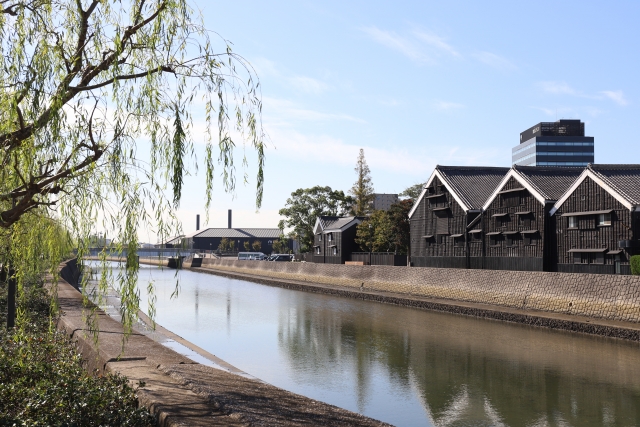
Even today, black-walled storehouses remain along the Handa Canal, and places such as the MIZKAN MUSEUM and the Handa Red Brick Building offer a glimpse into the city’s brewing heritage.
So why did brewing culture develop so strongly in Handa?
The answer lies in a combination of factors: a mild climate, good-quality groundwater, strong maritime transportation, and close ties with the food culture of Edo, the former name of Tokyo.
In this guide, we’ll explain why Handa became known as a “brewing town” and introduce places where you can still experience that history today.
Why Did Handa Become a Brewing Town? 4 Key Reasons
Handa had a natural environment well suited to making sake and vinegar.
It also had strong maritime transport routes that made it possible to ship products over long distances, as well as access to the huge market of Edo.
These advantages worked together and helped Handa grow into one of Japan’s important brewing centers.
A Mild Climate and Good-Quality Groundwater
The Chita Peninsula, where Handa is located, has a relatively mild climate.
The area was also blessed with good-quality groundwater, which is essential for brewing and fermentation.
Water and climate are both important when producing fermented foods such as sake and vinegar.
Handa’s natural environment provided a strong foundation for the development of both sake brewing and vinegar production.
Strong Maritime Transport Made It Possible to Ship Products to Edo
One of the biggest reasons Handa’s brewing industry grew was its access to maritime transportation.
Handa faced a natural harbor area known as Kinuura and had long been active in shipping and water-based trade.
Before modern trucks and railways existed, transporting heavy products such as sake and vinegar over long distances was difficult.
But Handa could use the Handa Canal and the port of Kamezaki to ship goods by boat all the way to Edo.
Edo was one of the largest cities in Japan at the time and later became modern-day Tokyo.
In other words, Handa had two major strengths:
it could produce high-quality goods, and it could transport large quantities of them to a huge market.
This strong transportation network helped Handa’s brewing industry grow significantly.
Sake Brewing Led to Vinegar Made from Sake Lees
Sake brewing had been active in the Chita Peninsula for a long time.
There were many sake breweries around Handa, and it is said that there were once more than 200 sake breweries across the Chita Peninsula.
This strong sake industry also led to the development of vinegar production.
When sake is made, a by-product called sake kasu, or sake lees, is produced.
In Handa, people developed a type of vinegar made by fermenting these sake lees further.
This vinegar is known as kasuzu, or sake-lees vinegar.
Instead of wasting a by-product of sake brewing, it could be turned into another useful product.
This tradition of making vinegar from sake lees would later become closely connected to the history of Mizkan, one of Japan’s best-known food companies.
Edo Food Culture, Especially Nigiri Sushi, Created Strong Demand
The food culture of Edo also played an important role in the growth of Handa’s vinegar industry.
Around the 19th century, nigiri sushi — the style of sushi that later developed into the sushi we know today — became increasingly popular in Edo.
And sushi needs vinegared rice.
Sake-lees vinegar made in Handa was transported to Edo and began to be used for sushi.
So in Handa, a clear chain developed:
Sake brewing was widespread
↓
Large amounts of sake lees were produced
↓
Vinegar was made from the sake lees
↓
The vinegar was transported to Edo by sea
↓
Demand increased as sushi culture grew
Handa’s brewing industry expanded not only because of its local natural environment, but also because it was closely connected to the huge consumer market of Edo.
Handa’s Brewing Culture Is Still Visible Today — Recommended Places to Visit
Handa’s brewing culture didn’t disappear into history.
Even today, you can walk around the city and see canals, storehouses, former factories, and other places connected to its brewing past.
Once you understand a little of the history, the city becomes more interesting.
You start to understand why there is a canal here, why old storehouses remain, and how these places were once connected to trade and brewing.
Handa Canal — The Waterway That Supported Handa’s Brewing Industry
The Handa Canal is one of the most important places for understanding Handa’s brewing culture.
Today, it is known as a pleasant sightseeing area with black-walled storehouses and waterfront scenery.
But in the past, it was an important transportation route used to ship sake and vinegar to Edo.
Brewing storehouses stood around the canal, and the products made there were loaded onto boats and transported east.
Today, the canal is quiet and peaceful.
But if you walk along it while remembering that sake and vinegar were once shipped from here all the way to Edo, the scenery may look a little different.
If you want to experience Handa’s brewing heritage, this is one of the first places to visit.
Learn About Vinegar Making at the MIZKAN MUSEUM
Mizkan is one of the companies most closely associated with Handa’s brewing culture.
Today, Mizkan is a major food company known throughout Japan, but its history began with vinegar production in Handa.
At the MIZKAN MUSEUM, you can learn how vinegar production developed in Handa and how vinegar was transported to Edo.
The museum also features displays about traditional vinegar-making tools and maritime transportation.
It’s a great place to understand Handa’s brewing history in a more concrete and visual way.
The museum is located close to the Handa Canal, so it’s easy to combine both in the same visit.
Beer Culture from the Meiji Era — Handa Red Brick Building
Handa’s brewing culture was not limited to sake and vinegar.
During the Meiji period (1868–1912), people in Handa also began producing beer.
At the time, beer was still a relatively new drink in Japan.
Handa used its existing brewing knowledge and techniques to take on this new challenge.
The building now known as the Handa Red Brick Building was originally constructed as a brewery for Kabuto Beer.
Its large red-brick structure still reflects the industrial energy of that era.
Today, the building is used as a tourist facility where visitors can learn more about the history of Kabuto Beer.
It shows how Handa’s brewing culture continued to evolve with the times, expanding beyond sake and vinegar into new forms of brewing.
Relax in the Atmosphere of the Old Storehouse District at Uotaro Kura no Machi Café
Uotaro Kura no Machi Café is not a historical museum, but it’s a nice place to stop while exploring Handa.
You can enjoy a meal or café break while taking in the atmosphere of the old storehouse district around the Handa Canal.
It’s easy to visit after walking around the canal or the MIZKAN MUSEUM.
Rather than rushing from one historical site to the next, stopping somewhere like this and enjoying the atmosphere is also part of the Handa experience.
Handa Is More Interesting When You Know the History
Handa developed as a brewing town because several advantages came together: a mild climate, good-quality groundwater, strong maritime transportation, and close ties with the food culture of Edo.
Sake brewing led to vinegar production.
Then, during the Meiji period, beer was added to Handa’s brewing story.
Brewing culture played an important role in the growth of the city.
Even today, you can still find reminders of that history at places such as:
- Handa Canal
- MIZKAN MUSEUM
- Handa Red Brick Building
- The old black-walled storehouses around the canal
The Handa Canal is beautiful even if you know nothing about its history.
But when you know that sake and vinegar were once shipped from here to Edo, the scenery feels a little different.
If you visit Handa, take some time to explore the city while keeping its brewing history in mind.